

Stuck on the Kuaishou payment risk detected recharge failed error? Learn why verification filters trip and how to restore your coin balance immediately.

快手 Kwai (CN) Coin
- -70%
快手 Kwai (CN) Coin 60 Kwai Coins
Buy NowUSD 1.01
USD 1.72
- -70%
快手 Kwai (CN) Coin 500 Kwai Coins
Buy NowUSD 8.45
USD 14.37
- -70%
快手 Kwai (CN) Coin 980 Kwai Coins
Buy NowUSD 16.56
USD 28.16
- -70%
快手 Kwai (CN) Coin 3980 Kwai Coins
Buy NowUSD 67.28
USD 114.38
- -70%
快手 Kwai (CN) Coin 6660 Kwai Coins
Buy NowUSD 112.59
USD 191.40
Immediate Steps to Fix Kuaishou Recharge Risk Errors
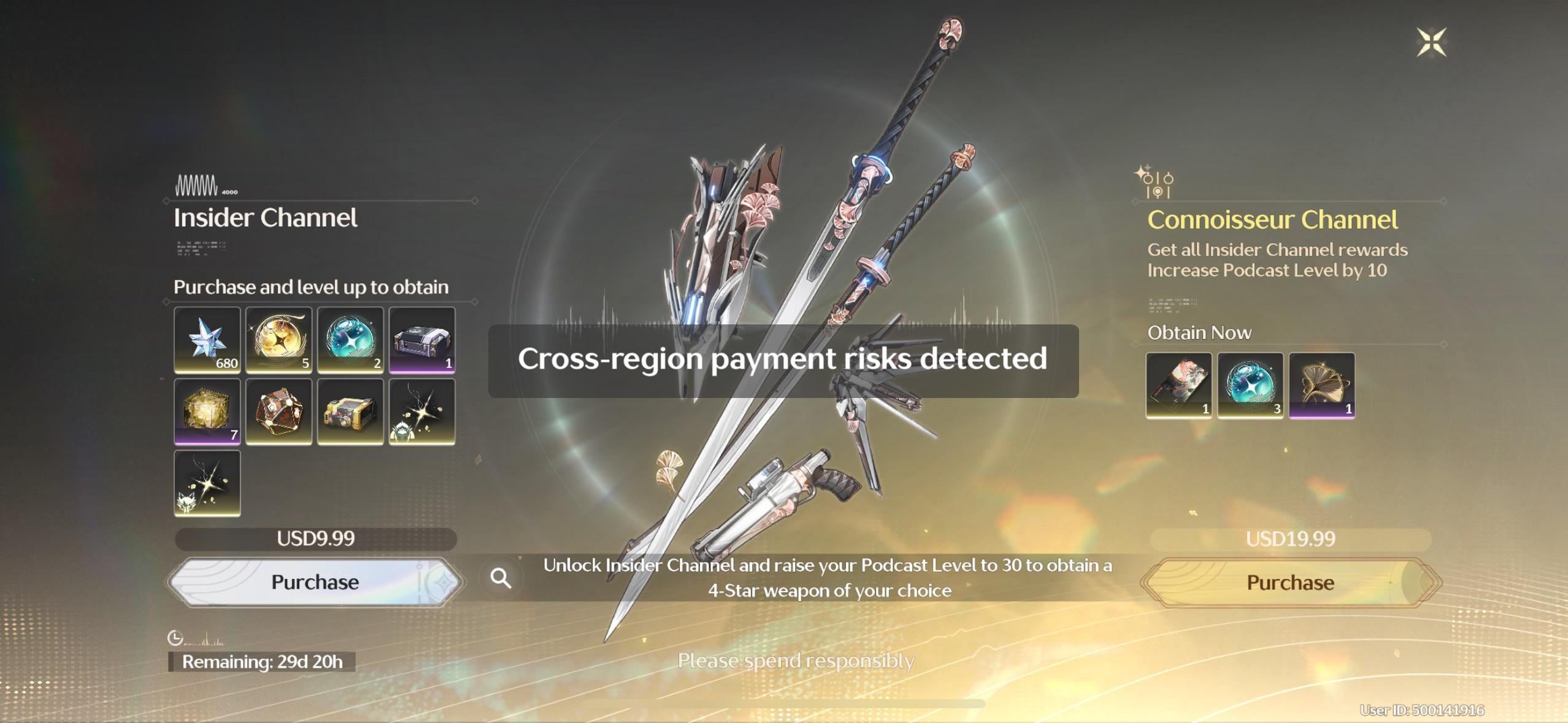
When Kuaishou intercepts your transaction with a "Payment Risk Detected" (支付风险提示) prompt, the platform's automated safety engine has flagged your session. Do not keep clicking the purchase button. Follow these specific steps to clear the error and regain access to coin purchases:
- Stop Active Retries Immediately: Repeatedly tapping the payment confirmation button after a failure signals brute-force behavior to merchant risk filters. Pause all attempts for at least 30 minutes to prevent an automatic 24- to 48-hour account lockdown.
- Disconnect VPN and Proxy Relays: Switch off any active VPN or proxy software. Kuaishou flags checkout requests originating from commercial data center IP ranges or sessions that jump across geographical regions during checkout.
- Clear Local In-App Cache: Open Kuaishou, go to
Settings>General>Clear Cache, and close the app. Restart your phone to flush out broken session tokens. - Check Mobile Wallet Verification Status: If you are using Alipay or WeChat Pay, verify that your profile has completed real-name verification and that your linked card has not exceeded single-transaction caps.
- Exit the Livestream Room Before Buying: Purchasing coins directly from a high-traffic live broadcast overlay frequently triggers concurrency circuit breakers. Go to your personal profile (
Profile>My Wallet) and try purchasing the baseline 10 RMB tier instead. - Bypass the In-App Gateway Using UID Top-Up: If domestic payment gateways reject your overseas card, top up via an external numeric User ID (UID) service. This routes around mainland bank checks and clears risk-control blocks.
Kuaishou AI Risk Control Engine and Security Center Triggers
The Kuaishou Security Center operates a real-time AI Risk Control Model running over 2,700 daily anti-fraud policies. This automated system intercepts roughly 98.1% of suspicious actions and profiles more than 70,000 blacklisted or abnormal devices daily with 99% accuracy.
Scale drives this scrutiny. In the first quarter of 2026, Kuaishou reported 412.7 million average daily active users (DAUs), 771.7 million monthly active users (MAUs), and RMB 8.5 billion in quarterly live streaming revenue (building upon 408.0 million DAUs and RMB 9.8 billion in live streaming revenue reported in Q1 2025, from RMB 33.7 billion in total group revenue). High-traffic streaming environments regularly face automated scripts attempting payment fraud. During traffic spikes or automated attacks, Kuaishou deploys emergency circuit breakers that temporarily restrict recharge functionality for sensitive account groups.
When you tap "Recharge", the security engine inspects several layers of account telemetry:
- Device Integrity: Scans for emulators, rooted operating systems, and virtualized hardware profiles.
- Network Environment: Cross-checks your current IP address against your registration region and past login locations.
- Account Interaction Patterns: Identifies rapid balance spending on newly registered accounts lacking browsing history.
- Clearing Compatibility: Validates whether the payment method settles directly through mainland Chinese clearing networks.
[User Initiates Kuaibi Recharge]
               │
               ▼
 [AI Risk Control Model Scan]
   ├── 2,700+ Daily Policies
   ├── Device Blacklist Match
   └── IP & Gateway Consistency
               │
       ┌───────┴───────┐
       ▼               ▼
 [Checks Pass]   [Anomaly Detected]
       │               │
       ▼               ▼
[Coins Credited] [Payment Risk Detected / Gateway Halt]
If any single variable fails, the platform drops the transaction instantly.
Bank Identification Number Mismatches and Foreign Card Rejections
The primary cause of payment risk alerts for international viewers is a structural banking mismatch. Kuaishou's direct in-app gateway connects exclusively to mainland China clearing networks through domestic WeChat Pay and Alipay pipelines.
When an overseas user inputs an international credit or debit card (such as Visa, Mastercard, American Express, or JCB), the gateway inspects the card's Bank Identification Number (BIN). Because non-mainland BINs do not route through China UnionPay or domestic settlement houses, the automated engine drops the transaction as unsupported. Even if your card permits international charges, an unrecognised BIN triggers an immediate risk flag.
Identity verification adds another roadblock. China's financial verification infrastructure automatically queries 18-digit national citizen identity cards (Shenfenzheng). When overseas users enter alphanumeric foreign passport numbers, backend registries cannot resolve the identity in real time. Discrepancies in name formatting—such as omitting a middle name or reversing given and family names—can trigger anti-money laundering review freezes on transactions as low as 5,000 RMB.
Identity and clearing requirements vary across payment types on mainland platforms:
| Verification Metric | Mainland China Bank Cards | Foreign-Issued Bank Cards | Passport-Verified Digital Wallets |
|---|---|---|---|
| ID Registry Format | 18-Digit National Resident ID | Non-standard Alphanumeric Passport | Alphanumeric Passport (Manual Verification) |
| Clearing Network | UnionPay / Mainland Clearing | Visa / Mastercard / JCB / Amex | Cross-Border Commercial Settlement |
| Gateway Pass Rate | 99% Native Compatibility | Blocked via BIN Check (0% Native) | Conditional (Subject to Gateway Merchant Filters) |
| AML Name Matching | Standard Chinese Character String | Romanized / Split Order Sensitive | Strict Match with Issuing Bank Record |
Native mainland instruments pass verification instantly, while foreign-issued cards fail automated risk checks unless processed through an external intermediary.
Network Location Anomalies and Account Environment Flags
Turning on a commercial VPN to fix a payment error almost always backfires. Kuaishou actively blacklists IP ranges owned by major VPN providers. Routing through a proxy node creates an immediate geographic mismatch between device telemetry and payment location, prompting the security engine to freeze checkout.
Rapid retries compound the problem. Much like Google Pay error codes OR-CCSEH-22 and OR_CCREU_01, Kuaishou's risk filters interpret multiple rapid-fire rejections as a compromised account. Resetting this status requires waiting up to 48 hours for the automated anti-fraud cooldown to expire.
Phone number bindings present a similar challenge. Kuaishou allows a single phone number to link to a maximum of two accounts. Overseas numbers often fail to receive short-code SMS verification prompts during transaction reviews. When this occurs, submit an in-app account appeal with your numeric Kuaishou ID and login history to restore account standing.
Comparing Kuaibi Conversion Rates and Payment Routes
Kuaibi (Kwai Coins) is the virtual currency used across Kuaishou for stream gifting and premium features. Kuaishou sets the standard exchange rate at 1 RMB for 10 Kuaibi, starting at a minimum recharge tier of 10 RMB (100 coins).
Purchasing coins through iOS costs significantly more. Apple applies a 25% to 30% commission on in-app purchases processed through the App Store, reducing coin yield to roughly 7 Kuaibi per 1 RMB compared to the standard 10 Kuaibi on direct web and UID channels.
Conversion rates and fees differ across channels:
| Recharge Channel | Conversion Rate | Transaction Fee / Commission | Account Requirements |
|---|---|---|---|
| Official Web / Direct Wallet | 1 RMB = 10 Kuaibi (1:10) | 0% (Standard Official Ratio) | Mainland China Bank Card / 18-digit ID |
| Apple iOS In-App Purchase | 1 RMB ≈ 7 Kuaibi (1:7) | 25%–30% Apple Platform Fee | China-Region Apple ID with Linked Payment |
| Third-Party UID Top-Up | 1 RMB = 10 Kuaibi (1:10 base) | Platform Processing Fee | Numeric Kuaishou ID (No Password Needed) |
Web and direct UID rails deliver the full 1:10 conversion rate, whereas iOS in-app purchases forfeit roughly 30% of coin yield.
How to Bypass In-App Payment Risk via Numeric User ID
If you lack a mainland Chinese bank card or your account is stuck in a payment risk loop, an external UID top-up is the cleanest workaround. This routes around the in-app payment gateway entirely.
Direct UID recharging requires only your public numeric Kuaishou User ID—no account passwords, identity documents, or mainland payment cards required. When you purchase Kwai (CN) Coins by numeric UID, the service credits coins directly to your account balance over official commercial distribution channels within 1 to 2 minutes (up to 30 minutes during high platform traffic).
Follow these steps to locate your numeric ID accurately:
- Open the Kuaishou app on your mobile device.
- Tap the menu icon in the top-left corner and tap your profile avatar.
- Locate the numeric string displayed beside your profile nickname (labeled as 快手号 or ID).
- Copy this number directly. If you have customized your handle into alphanumeric text, check your profile settings to view the permanent numeric ID.
- Paste the numeric ID into the top-up order field.
Verify the numeric ID carefully. Direct UID deliveries are non-refundable once credited; entering an incorrect ID delivers the coins to that profile permanently.
Regulatory Spending Caps and Wallet Transaction Limits
Exceeding wallet transaction thresholds will trigger payment failures even on passport-verified Chinese digital wallets. Chinese regulatory frameworks and individual mobile wallets enforce distinct payment caps.
Macro-level tourist guidelines conflict directly with wallet-level limits. While official tourism policies permit verified foreign visitors spending ceilings up to 5,000 USD per single transaction and 50,000 USD annually, Weixin Pay's internal processing rules enforce a strict cap of 6,500 RMB per single foreign card transaction and a 50,000 RMB monthly limit, alongside a 3% fee on single transactions exceeding 200 RMB. Alipay enforces its own thresholds for bound international cards: roughly 15,000 RMB per transaction, 50,000 RMB daily, and 600,000 RMB annually.
Wallet limits and surcharges break down as follows:
| Payment Instrument | Single Transaction Limit | Monthly / Annual Spending Cap | Processing Surcharges |
|---|---|---|---|
| Weixin Pay (Foreign Card) | 6,500 RMB | 50,000 RMB / month (65,000 RMB aggregate) | 0% under 200 RMB; 3% for 200 RMB and above |
| Alipay (Foreign Card) | 15,000 RMB | 50,000 RMB / day; 600,000 RMB / year | Varies by Merchant Category |
| National Policy Ceiling | 5,000 USD | 50,000 USD / year | Regulatory Maximum Standard |
| Kuaishou Minimum Recharge | 10 RMB (100 Kuaibi) | Determined by Account Tier | Baseline Entry Tier |
Staying below these transaction thresholds prevents linked cards or digital wallets from triggering automated fraud alerts during checkout.

Troubleshooting Lingering Balance Sync and Delivery Glitches
If your payment completes but your Kuaibi balance does not update, wait before initiating another recharge. High-traffic streams cause balance synchronization delays; allow 10 to 30 minutes for platform servers to reconcile transactions during peak broadcast windows.
If the balance remains uncredited after 30 minutes, check your payment receipt to confirm the submitted User ID matches your account profile. If the ID is accurate, submit a support ticket via Settings > Feedback & Help inside the Kuaishou application, attaching your transaction order number.
Beware of third-party advertisements promising unrealistic exchange ratios, such as 1 RMB to 100 Kuaibi. Kuaishou enforces a strict baseline exchange rate of 1 RMB to 10 coins. Any listing advertising rates far above platform standards is fraudulent and designed to compromise account credentials. Utilizing vetted secure Kuaishou Coin top-up options protects your payment details while keeping your profile fully compliant with platform policies.
FAQ
Why does Kuaishou display a payment risk detected error during recharge?
Kuaishou's automated anti-fraud engine flags transactions when it detects unsupported international card BINs, active VPN connections, or unverified foreign digital wallets. The platform enforces strict domestic clearing rules and blocks transactions that fail standard automated identity checks.
Can I use an international Visa or Mastercard directly on Kuaishou?
No. Kuaishou's direct in-app payment gateway rejects non-mainland Chinese bank card BINs automatically. Attempting to enter an international card directly into the native checkout prompt triggers an immediate payment risk decline.
Does turning on a VPN fix Kuaishou recharge payment errors?
No. Using a VPN triggers fraud alerts because Kuaishou monitors commercial proxy subnets and IP discrepancies. Geolocation jumps during checkout signal suspicious behavior to the automated risk model.
How can overseas users recharge Kuaibi without a Chinese bank card?
Overseas users can use an external direct top-up service that credits their balance using only their numeric Kuaishou User ID. This bypasses mainland bank checks and eliminates the need for domestic real-name verification.
Where do I find my Kuaishou User ID (UID) for top-ups?
Open Kuaishou, tap the top-left menu icon, and tap your avatar to open your personal profile. Your permanent numeric User ID is displayed directly beside your profile nickname.
Why are Kuaibi top-up prices more expensive on an iPhone?
Apple collects a 25% to 30% platform fee on all iOS in-app purchases, reducing your coin yield from the standard 10 Kuaibi per 1 RMB down to roughly 7 Kuaibi. Purchasing via web-based or direct UID top-up routes avoids this store commission.
What should I do if my payment succeeds but Kuaibi does not arrive?
Wait 10 to 30 minutes for server synchronization before taking further action. If your coin balance still does not update, verify that the numeric User ID on your order receipt matches your account profile exactly.
Restoring Your Kuaishou Coin Purchases Safely
Resolving Kuaishou's payment risk detected error requires working within the platform's infrastructure constraints. The AI Risk Control Model actively blocks international bank cards, unverified identity credentials, and unstable network connections. Switching VPN locations or repeatedly retrying failed payments will only lock your account.
If you hold a mainland Chinese bank card, resolve your verification discrepancies directly inside your domestic wallet. For international viewers without mainland banking credentials, the most reliable option is to get your 快手 Kwai (CN) Coin recharge through direct numeric UID top-up, avoiding domestic gateway restrictions while preserving standard coin exchange rates.

Community
Comments